Developer tools
IW4 Studio
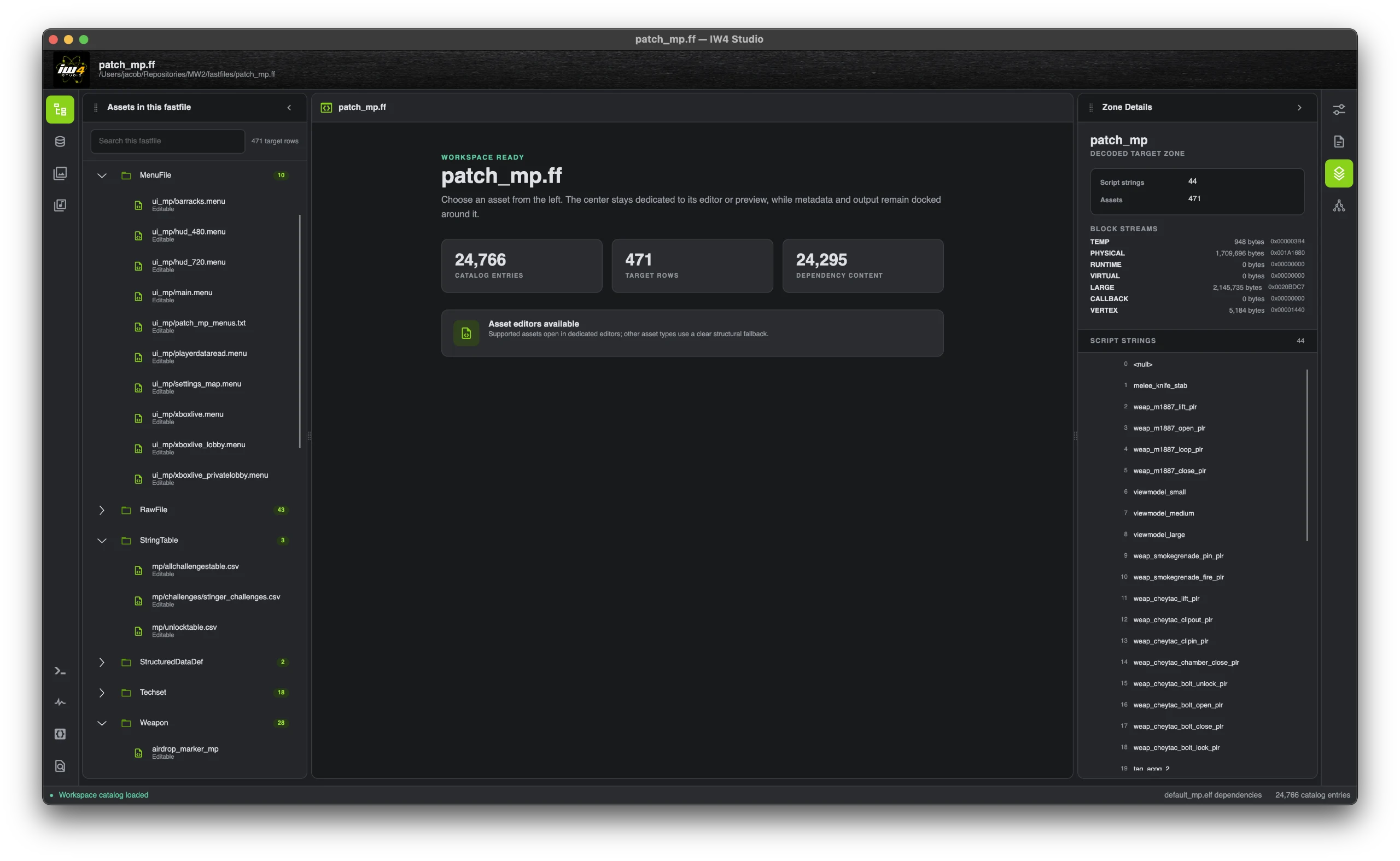
A free, open-source workspace that turns reverse engineering into tools for Modern Warfare 2 modders: script diagnostics, live menu previews, weapon customization, custom audio and map creation.
A CLOSER LOOK
9 photos
BEHIND THE PROJECT
The story & the work.
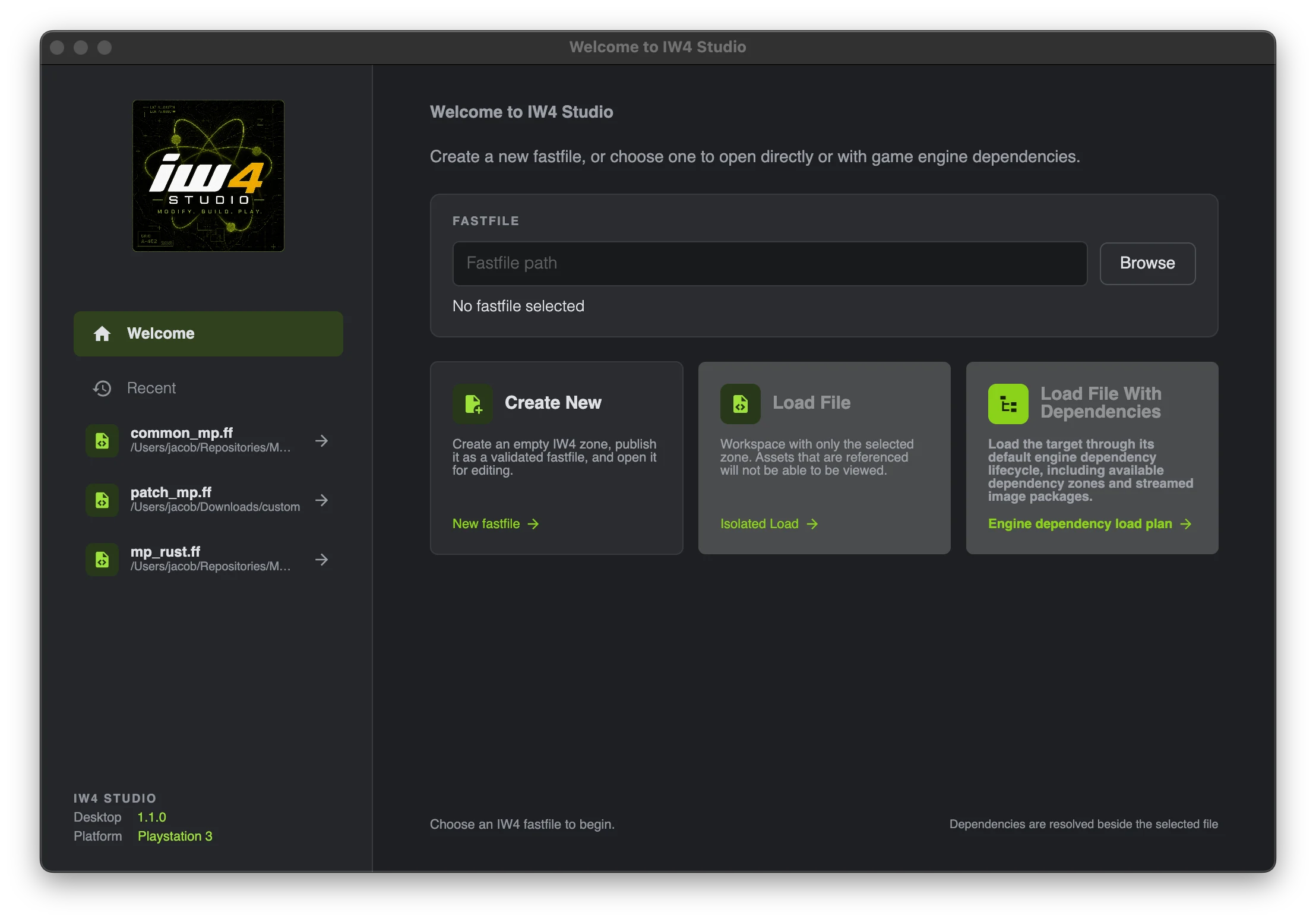
I built IW4 Studio to turn what I learned about Modern Warfare 2's internals into a workspace other modders could use and extend. The goal was to make creative work on PlayStation 3 more accessible: editing scripts, designing menus, customizing weapons and materials, working with audio, and building new maps. Each editor grew from understanding what the game needed and turning that understanding into a practical workflow.
Reverse engineering the foundation
The first challenge was understanding the game's proprietary asset formats. An asset's name was only part of the picture. Its internal data, references to other assets, and platform-specific layout all had to be understood before it could be reliably loaded, edited, and packaged.
I used executable analysis, comparisons between assets, existing community research, and feedback from real PS3 hardware to develop loaders and editable representations. That work became the foundation of the tooling. A discovery about the engine could become something another creator could use through an editor, with less need to investigate the same binary structures again.
Faster feedback for scripts, menus, and game data
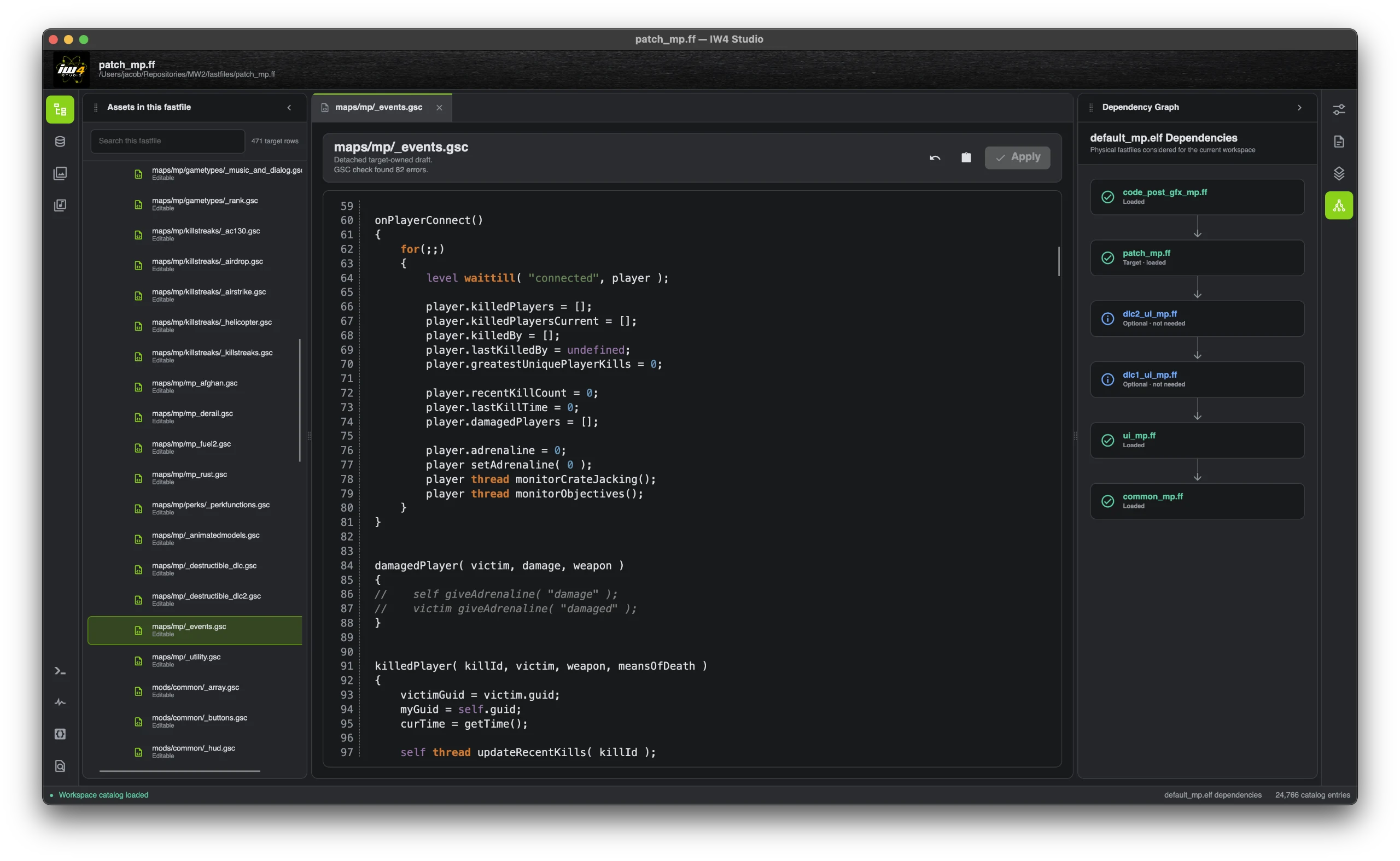
For game scripting, I brought GSC syntax checking and supported semantic diagnostics into the editor. The tooling uses the current script buffer alongside the available workspace context to help authors locate supported errors earlier. That gives newcomers useful guidance and lets experienced creators spend more of the editing cycle developing gameplay ideas.
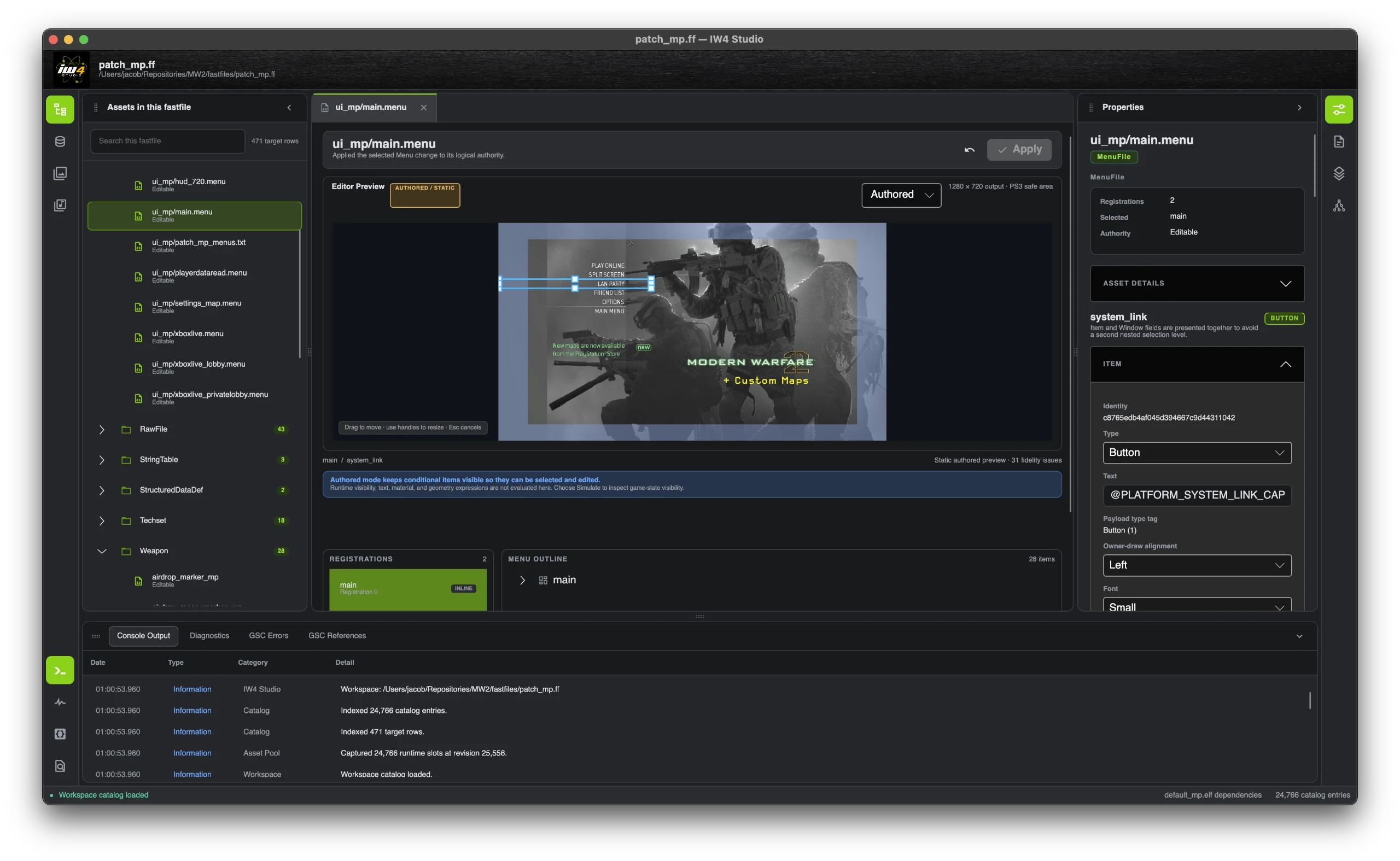
Menu design needed visual feedback. I built a menu file editor with live preview and debugging controls for supported layouts and states, so authors could inspect positioning, sizing, styling, and materials while editing. In-game validation remains part of the workflow, but the preview makes everyday layout changes easier to understand.
String tables gained a table editor and CSV import. Structured game data could be worked on directly, making another part of the game's asset system more approachable within the same workspace.
Weapons and custom animated camos
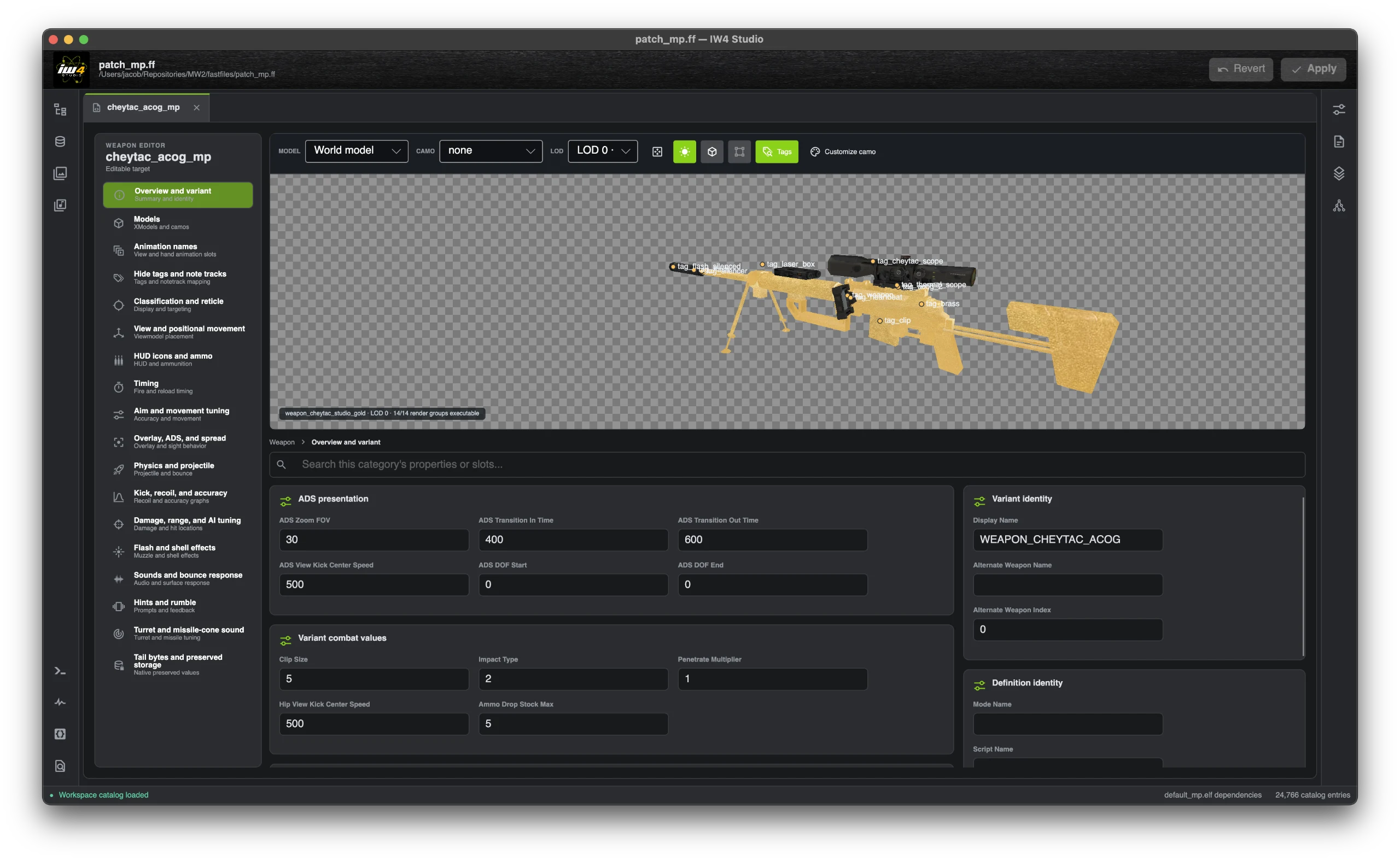
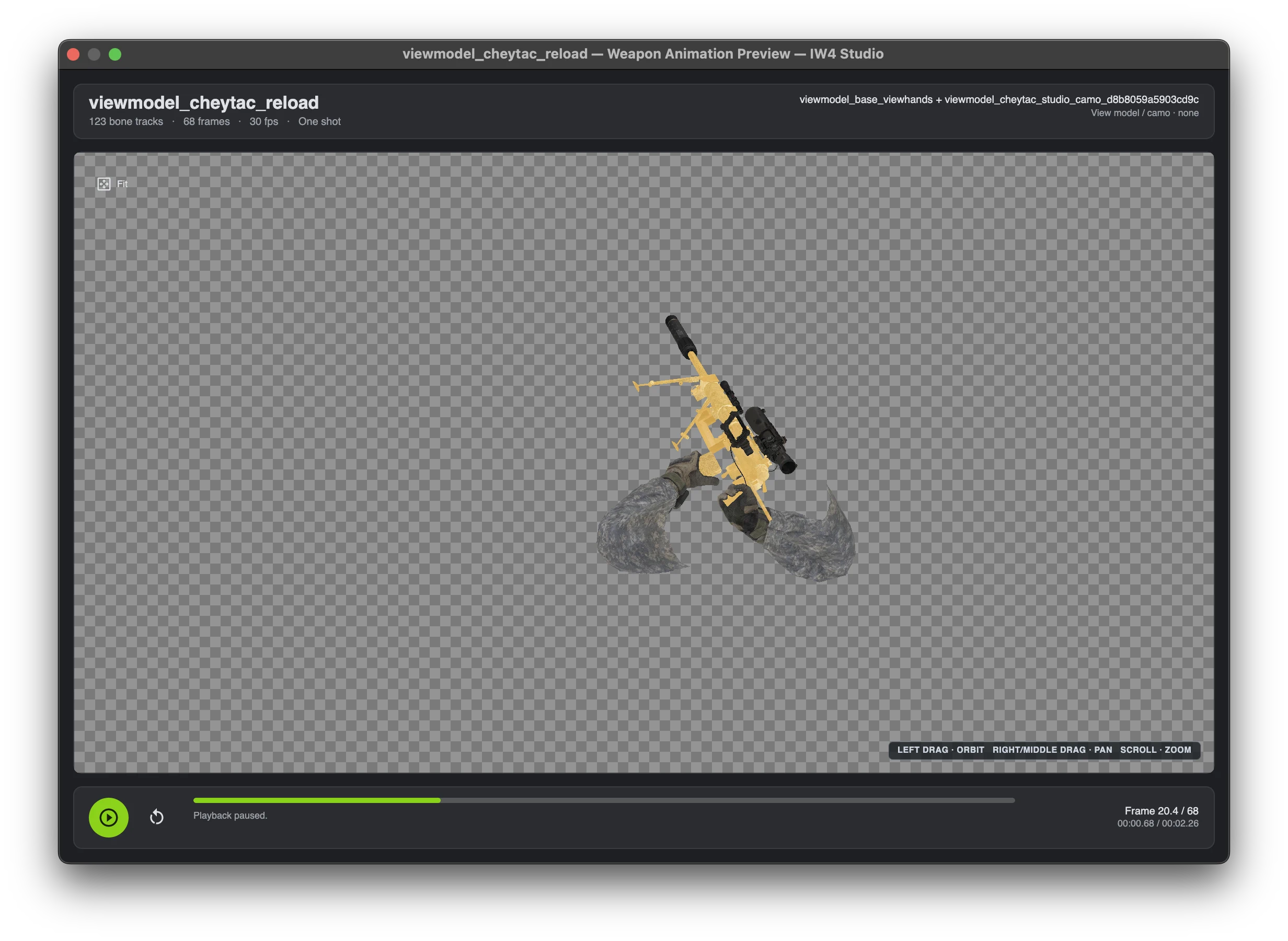
Weapon definitions contain interconnected properties, models, animations, and material references. I brought those elements into one workspace, with controls for inspecting the asset and staging changes. This made weapon customization easier to explore and reduced the bookkeeping involved in coordinating related edits.
One of the most memorable breakthroughs was custom animated weapon camos, something I initially thought might be impossible. The solution required coordinated replacement materials, updated model references, and correctly packaged dependencies. I built tooling to construct and publish those assets together, with controls for visual styles and animation timing.
The value is visible in the result: creators can give a familiar weapon a new visual identity through an authoring workflow that handles the underlying asset relationships.
Making custom sound work in the game
Audio brought another set of hidden requirements. A sound needed the right package arrangement, native metadata, and sound alias configuration for the PS3 engine to use it. I worked through those requirements, using hardware feedback to distinguish a successful build from actual playback.
The breakthrough came when hardware feedback confirmed custom laughter playing on a patched PS3 through a generated sound package, after earlier candidates had been silent. That connected imported audio to the engine's expectations and established a supported packaging path, capturing knowledge the next creator could build on.
Bringing the pieces together in custom maps
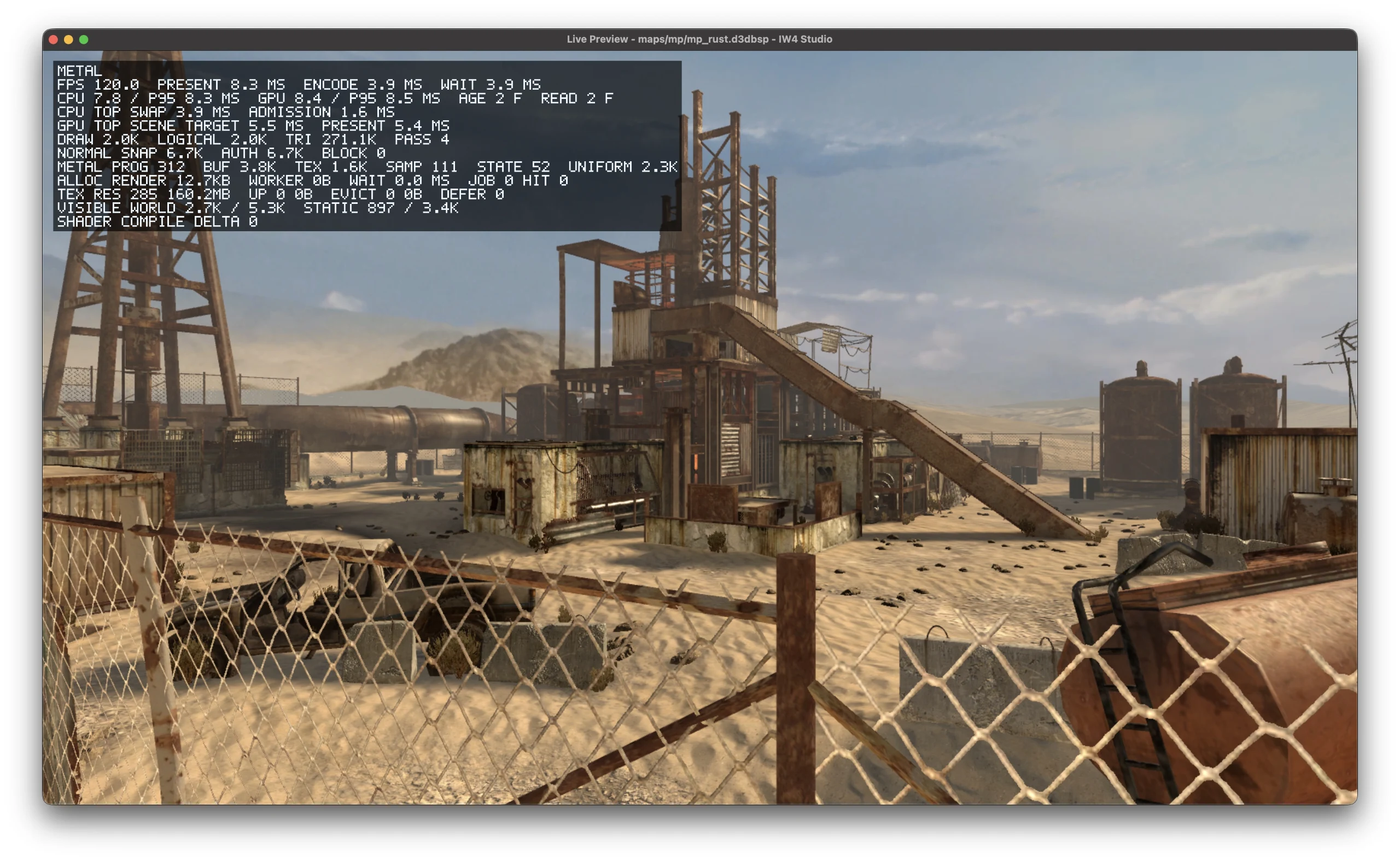
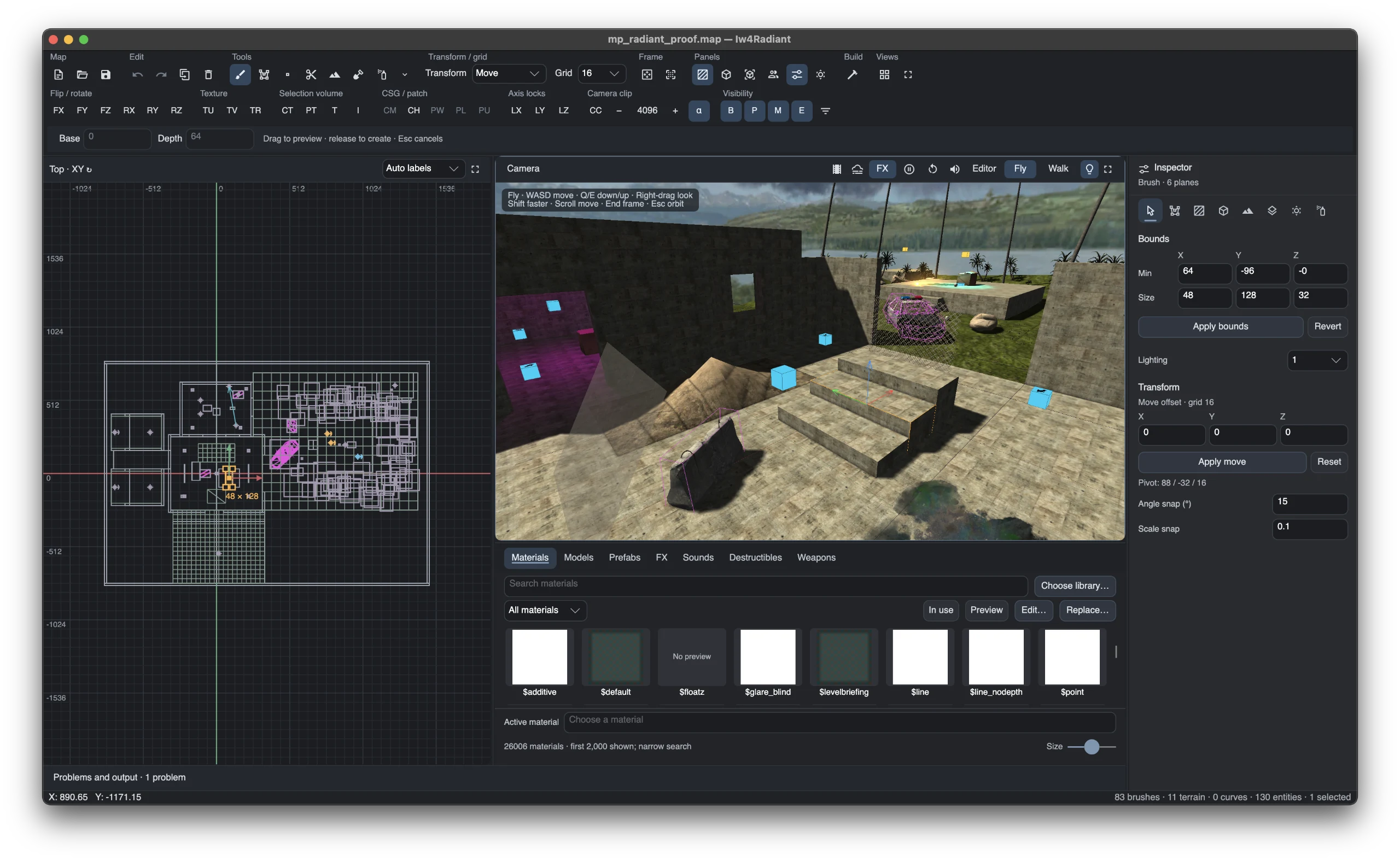
Iw4Radiant extends the project into environment creation. A playable map brings together geometry, collision, lighting, materials, models, effects, sounds, scripts, and their dependencies. I connected map authoring with the asset library and build pipeline so those pieces could be prepared together.
Dependency handling was central to that work. Models need materials, materials need shaders and textures, and sounds may need separate streamed packages. The tools follow those relationships and package the required assets for supported workflows.
One completed custom map build packaged 254 streamed images with no donor fastfiles or external asset fallbacks, and was subsequently reported working on PS3. Fastfiles are the game's asset packages; removing the need to borrow them for that build demonstrated a map prepared from its asset library with the required dependencies supplied by the tooling.
Built for the modding community
IW4 Studio is free and open source, built with .NET and Avalonia with Windows and macOS build targets. It builds on community knowledge and makes the resulting tools available for others to use, study, and extend.
The lasting value is both the workspace and the engine knowledge encoded within it. Every format understood, dependency handled, and editing workflow improved gives the next modder a stronger starting point for creating something of their own.